English
 Français
 Deutsch
 Español
 عربي
عربي
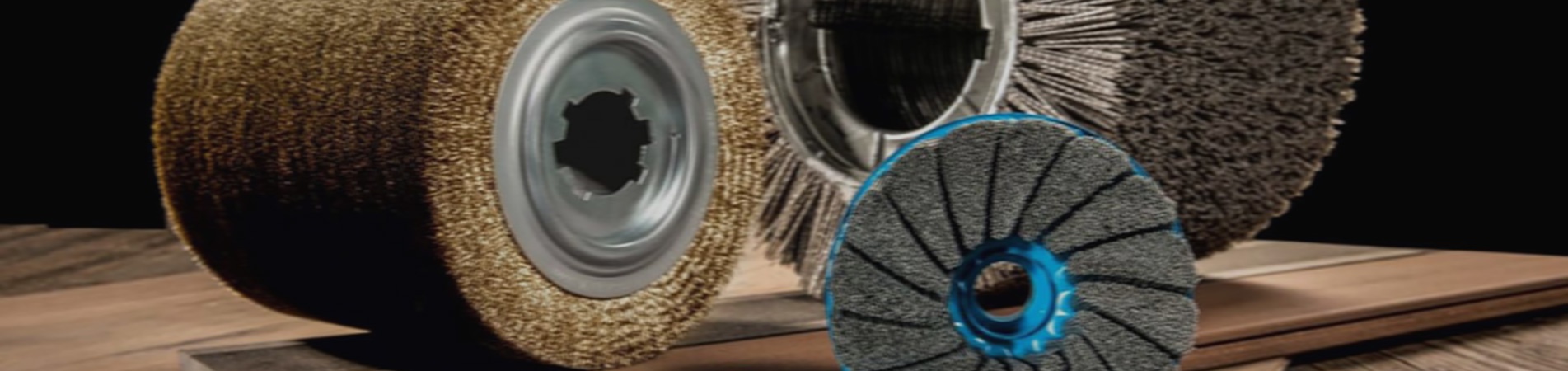
In the metalworking, surface preparation, and equipment maintenance industries, selecting the right polishing wheel is far from a trivial detail.
The decision to use a brass wire or a steel wire brush wheel directly impacts processing efficiency, surface quality, operational costs, and even the lifespan of your equipment.
However, the market is flooded with various models—such as the crimped brass wire polishing wheel, the heavy duty steel brush wheel, and the industrial cylindrical wire brush wheel—leaving many engineers and procurement managers confused about which to choose.
To help you make a quick, accurate judgment, we have compared these options across five key dimensions: material properties, application scenarios, polishing effects, lifespan costs, and equipment compatibility. We have also included industry data and test conclusions to help you finally decide which one is right for you.
Before selecting a brush wheel, it is crucial to understand the physical properties of the materials. The table below illustrates the five most critical attribute differences between standard brass wire and carbon steel wire in the surface polishing industry:
Material Property Comparison (Lab Data)
| Property | Brass Wire | Carbon Steel Wire |
| Vickers Hardness (HV) | 80–120 HV | 180–250 HV |
| Corrosion Resistance | ★★★★★★★ | ★ |
| Electrical Conductivity | ★★★★ | ★★ |
| Wear Resistance | ★★★ | ★★★★★ |
| Surface Damage Risk | Low | High |
Key Takeaways:
Brass wire is softer and will not easily scratch materials. Therefore, a Crimped Brass Wire Polishing Wheel is particularly suitable for surfaces requiring "gentle treatment."
Steel wire has high hardness and can rapidly remove oxide scales, rust layers, or welding slag. This makes the heavy duty steel brush wheel the workhorse for heavy-load scenarios.
The following recommendations are based on usage data from over 1,000 factories.
Typical Applications & Best Choices
| Scenario | Recommended Brush Wheel | Reason |
| Light cleaning of Al, Cu, SS | crimped brass wire polishing wheel | Does not scratch the surface; fine polishing. |
| Removing weld scale & heavy rust | heavy duty steel brush wheel | High hardness; fast removal efficiency. |
| CNC part deburring | Brass Wire | Preserves part edges and corners. |
| Rough grinding before coating | Steel Wire | Increases surface tension for better adhesion. |
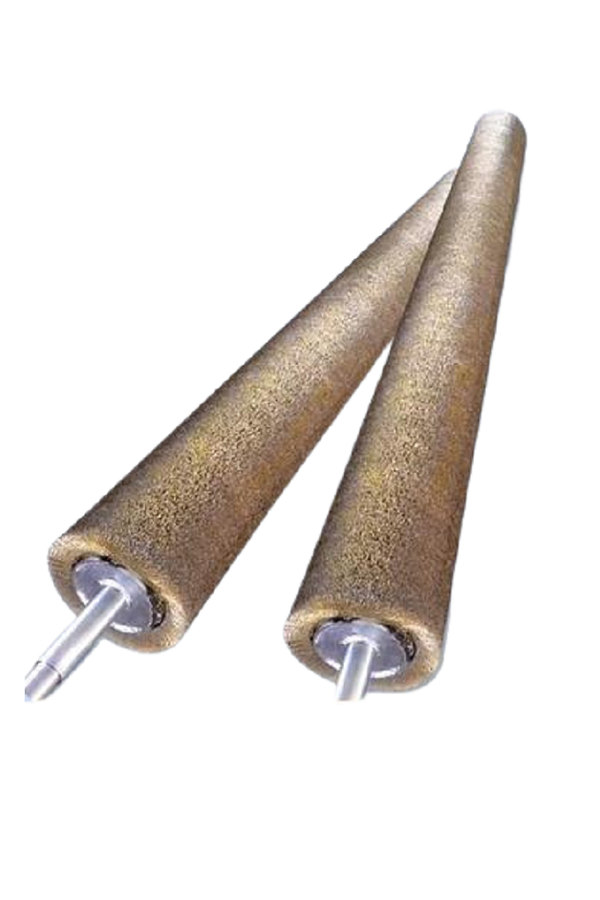
| Uniform polishing of shafts/cylinders | industrial cylindrical wire brush wheel | Enveloped structure suitable for continuous processing. |
| Wire drawing texture on metal | Brass Wire | Creates a more controlled, uniform grain. |
| Maintenance & daily cleaning | Brass or Steel | Depends on the hardness of the base surface. |
To eliminate subjective judgment, we conducted standardized tests on two materials:
Test Materials: Stainless Steel 304, Low Carbon Steel Q235, Aluminum 6061
Conditions: 1500 rpm, dry polishing, 5N pressure
Surface Roughness Improvement (Unit: Ra μm)
| Material / Brush Wheel | Brass Wire | Steel Wire |
| Q235 Mild Steel | -0.4 | -1.1 |
| 304 Stainless Steel | -0.6 | -0.9 |
| 6061 Aluminum | -0.5 | -0.3 |
Results Interpretation:
Steel wire shows a significant effect in "rough polishing" and rapid surface layer removal.
Brass wire polishing results in a smoother decline in Ra values, delivering a finer and more uniform overall finish.
For Aluminum, steel brush wheels are prone to causing scratches, making brass wire the preferred choice.
Many companies ask: "Brass wire is slightly more expensive, but is it necessary?"
We analyzed this from an industrial usage cycle perspective:
Unit Cost & Lifespan Analysis (Statistical Data)
| Metric | Brass Wire Wheel | Steel Wire Wheel |
| Average Lifespan | 40–60 Hours | 60–120 Hours |
| Unit Cost | Slightly High | Medium |
| Efficiency | Medium | High |
| Long-term Heat Risk | Low | Medium-High |
| Replacement Frequency | Medium | Low |
Key Takeaways:
Steel brush wheels are generally more wear-resistant and have a longer lifespan, offering better cost-performance in high-volume rough processing.
Brass wire is non-sparking, safer, and indispensable for industries with conductivity requirements or those needing non-destructive processing.
Not all polishing machines adapt to all brush wheels. For instance:
Which equipment fits the Industrial Cylindrical Wire Brush Wheel?
Automatic conveyor-style wire drawing machines
Outer diameter (OD) tube polishing machines
CNC cylindrical machining centers
Large-scale automated cleaning equipment
Features:
✔ Enveloped structure achieves 360° uniform contact.
✔ Suitable for long-duration continuous operation.
✔ Excellent results for round bars and shaft-type products.
Based on the practical experience of industry engineers, you only need to answer these four questions:
Is the target surface soft or hard?
Soft Material → Choose Brass Wire
Hard Material → Choose Steel Wire
Is the main task "fine polishing" or "heavy removal"?
Fine Polishing → crimped brass wire polishing wheel
Rapid Removal → Heavy Duty Steel Brush Wheel
Does it involve round workpieces like shafts, bars, or tubes?
Yes → industrial cylindrical wire brush wheel
Is there a high precision requirement for the final surface?
Yes → Prioritize Brass Wire
No specific requirement → Steel Wire is sufficient
Case 1: Furniture Hardware Factory
Material: Aluminum Alloy
Process: Surface cleaning before anodizing
Final Choice: crimped brass wire polishing wheel
Reason: The surface must not be scratched; this determines the yield rate.
Case 2: Steel Structure Welding Workshop
Material: Carbon Steel
Process: Weld seam oxide scale removal
Final Choice: heavy duty steel brush wheel
Reason: Fast removal speed and long wear life are critical.
Case 3: Auto Parts Manufacturer
Material: Cylindrical Precision Parts
Process: Continuous outer circle polishing
Final Choice: industrial cylindrical wire brush wheel
Reason: Adapted to the automatic wire drawing machine, improving efficiency by 35%.
You can contact us for help in any of the following ways


Copyright © 2026 Anqing Hongyue Machinery Equipment Co., Ltd. All Rights Reserved.
 Network Supported