English
 Français
 Deutsch
 Español
 عربي
عربي

In the competitive world of flexible packaging, the difference between a product that stays fresh for weeks and one that spoils in days often comes down to a single, invisible factor: Airflow.
Whether you are packaging hot-filled baked goods, moisture-rich vegetables, or industrial chemicals, your packaging film acts as a barrier. But sometimes, that barrier needs to be permeable. Trapped moisture can lead to mold, while trapped air can cause bags to burst during palletizing.
Achieving the perfect balance requires precision. This guide explores the two primary methods of air regulation—Micro-Perforation and Macro-Perforation—and helps you select the correct Perforation Needle Roller for Plastic Film to ensure your production line runs smoothly and your products stay protected.
What is it?
Macro-perforation creates holes that are clearly visible to the naked eye, typically ranging from 3mm to 10mm in diameter. This method is less about "atmosphere control" and more about "volume ventilation."
The Mechanics:
Macro holes are usually punched using a Cold Needle process. Because the holes are large, they allow for rapid air evacuation.
Why Use It?
Rapid Cooling: Essential for hot-fill products that need to vent steam immediately.
Preventing "Ballooning": For pet food or cement bags, trapped air makes stacking pallets impossible. Macro holes allow air to escape instantly when the bag is compressed.
Mold Prevention: For washed leafy greens or fruits, stagnant moisture is the enemy. Large holes facilitate constant air circulation.
The Solution:
For these demanding environments, durability is non-negotiable. Standard Needle Rollers often corrode when exposed to the humidity of fresh produce packaging lines.
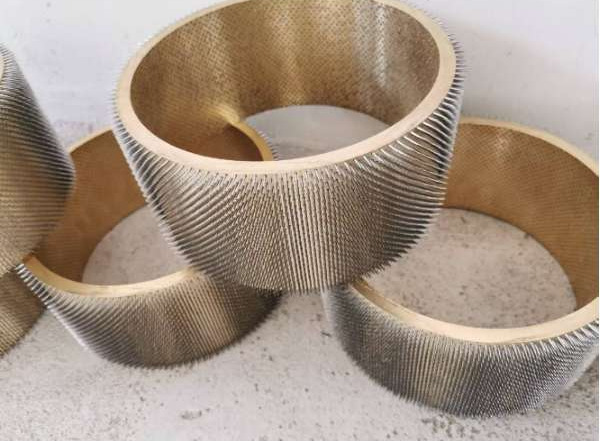
This is where the Anti-Rust Perforation Needle Roller becomes essential. These Perforation Needle Rollers are often crafted from brass or specialized alloys. The "Anti-Rust" feature ensures that the pins remain sharp and clean, preventing rust particles from contaminating food products and extending the lifespan of the Needle Roller significantly.
What is it?
Micro-perforation involves creating tiny, often invisible holes, usually smaller than 1mm (down to 50–200 microns).
The Mechanics:
Unlike macro-perforation, which is about letting air rush out, micro-perforation is about letting the package breathe at a specific rate. This is critical for Modified Atmosphere Packaging (MAP).
The "Science" of Shelf Life:
Different foods have different respiration rates.
Crusty Bread: Needs to release moisture slowly to stay crispy but not dry out.
Exotic Mushrooms: Need a specific Oxygen Transmission Rate (OTR) to prevent sliminess.
The Solution:
Achieving this level of precision requires a Micro Vent Perforation Needle Roller.
Standard Needle Rollers lack the density and fineness required for this task. Micro Vent Perforation Needle Rollers feature high-density pin patterns (up to hundreds of pins per square inch) and ultra-fine needle tips. This ensures that every hole is identical in size, providing consistent OTR values across the entire film web. If the pins on the Perforation Needle Roller are uneven, some packages will spoil while others dry out—precision is the only way to guarantee consistency.
When selecting a Perforation Needle Roller for Plastic Film, engineers and procurement managers must look beyond just hole size. Here are three critical factors often overlooked:
PE (Polyethylene): A tough, stretchy material. It requires sharp, durable pins found in our Anti-Rust Perforation Needle Roller series to puncture cleanly without stretching the film.
OPP/BOPP: Brittle materials that tear easily. These often require heated micro-perforation or ultra-sharp precision pins on the Needle Roller to avoid splitting the web.
If your packaging line involves humidity (e.g., washing vegetables) or corrosive environments, a standard carbon steel Needle Roller is a liability. Rust dulls the pins, leading to ragged holes and film tearing. Investing in a brass or coated Anti-Rust Perforation Needle Roller reduces downtime for cleaning and replacement.
Square Pattern: Good for general venting.
Diamond/Staggered Pattern: Better for maintaining the tensile strength of the film, as it avoids creating a "tear line" across the package.
Even with the best machinery, issues can arise. Here is how high-quality Perforation Needle Rollers solve them:
Problem: The film keeps tearing at the perforation line.
Problem: Holes are blocked or "flapped."
Cause: The pin is pushing the plastic rather than piercing it.
Solution: Your pins may be worn out. Upgrading to a high-quality Perforation Needle Roller ensures the tips stay sharper for longer, creating clean, round apertures.
| Feature | Anti-Rust Perforation Needle Roller | Micro Vent Perforation Needle Roller |
| Hole Size | Macro (Visible, >1mm) | Micro (Invisible, <1mm) |
| Best Application | Fresh Produce, Pet Food, Industrial Bags | Bakery, Microwavable Films, MAP |
| Key Benefit | High Durability & Moisture Resistance | Exact OTR Control & Precision |
| Material | Brass/Alloy (Corrosion Resistant) | High-Grade Steel/Brass (Precision Tipped) |
Your packaging is only as good as the Needle Roller that creates it. Whether you need the rugged durability of an Anti-Rust Perforation Needle Roller for a humid vegetable packing line, or the surgical accuracy of a Micro Vent Perforation Needle Roller for high-end bakery goods, choosing the right equipment is an investment in product quality.
You can contact us for help in any of the following ways


Copyright © 2026 Anqing Hongyue Machinery Equipment Co., Ltd. All Rights Reserved.
 Network Supported